Our Daughters Foundation
FAQs: Get Your Endometriosis Questions Answered
From diagnosis delays to treatment options, find straightforward answers to the questions you have about endometriosis.
FAQs: Get Your Endometriosis Questions Answered
From diagnosis delays to treatment options, find straightforward answers to the questions you have about endometriosis.
What is endometriosis, and is it considered a menstrual disease?
Endometriosis is a systemic, inflammatory condition characterized by tissue similar to the lining of the uterus growing in other parts of the body. Endometriosis has been found in every organ. It is not simply a menstrual disease, yet is often mischaracterized as such, even by reputable sources.
Approximately how many people are affected by endometriosis, and what are some common symptoms they may experience?
Endometriosis affects approximately 1 in 10 women. Common symptoms include, but are not limited to, pelvic pain any time during the month, a wide range of GI symptoms, urinary symptoms, fatigue, debilitating periods and more depending on where the endometriosis lesions are located in the body.
What is the average diagnostic delay for endometriosis, and what factors contribute to this delay?
Symptoms often start early in life, but due to cultural taboos, misinformation and a historical lack of emphasis in medical education, they may be ignored or misdiagnosed by caregivers, healthcare consumers and practitioners alike. The average diagnostic delay is 7-10 years.
When can endometriosis symptoms begin, and what percentage of teenagers withchronic pelvic pain may have the condition?
Endometriosis symptoms may begin as early as when puberty starts. Endometriosis symptoms can present before menstruation, during menstruation, and/or after menstruation. An estimated 70% of teens with chronic pelvic pain go on to be later diagnosed with endometriosis.
What constitutes a "red flag" regarding pelvic pain, and what action should be taken if someone experiences this?
Red flag: If you or your patient regularly feels pain during or around periods, and this pain is bad enough to interfere with usual activities, this is a red flag - it is not normal and should be investigated further as soon as possible. (If you do not have this, it doesn't mean that you don't have endometriosis).
Identified risk factors for developing endometriosis.
Risk factors for endometriosis include a mother or sister having the disease (7x increased risk), early onset of menses, short or frequent menstrual cycles, Mullerian abnormalities, autoimmune conditions and more. However, many people develop endo who have none of these risk factors.
Is a hysterectomy considered a cure for endometriosis, and is pregnancy a cure?
Hysterectomy is not a cure for endometriosis. A disease characterized by tissue found outside of the uterus is not cured by removal of the uterus, ovaries and/or tubes and cervix. Over 100,000 hysterectomies are performed each year in the United States for endometriosis and most of them are unnecessary. Neither is pregnancy a cure for endometriosis.
Why are individualized, multi-disciplinary treatment plans needed for endometriosis, and which specialist should be consulted?
People with endometriosis need an individualized, multi-disciplinary treatment plan that may include specialized, incredibly difficult surgery. Most gynecologists are not trained in advanced endometriosis cases. Drug therapy may suppress symptoms, yet it does not eradicate endometriosis. Patients should be referred to an endometriosis specialist. We cannot emphasize this enough, please go to a an endometriosis specialist. Your regular OB/GYN should refer you to one if they suspect you have endo.
What are some common co-morbidities associated with endometriosis?
People with endometriosis have an increased risk of co-morbidities including allergies, asthma, and chemical sensitivities, autoimmune diseases such as multiple sclerosis and lupus, chronic fatigue syndrome and fibromyalgia, and certain cancers, such as ovarian and breast cancer. Many doctors are also seeing MCAS, POTS and hEDS as common co-morbidities.
How does endometriosis impact quality of life beyond physical symptoms, and what holistic approach is recommended?
Endometriosis often reduces quality of life and contributes to psychological distress. Unnecessary delays in diagnosis and gaslighting contribute to the negative mental health impacts of the disease. A holistic approach to care including mental health support can improve quality of life.
What is endometriosis, and is it considered a menstrual disease?
Endometriosis is a systemic, inflammatory condition characterized by tissue similar to the lining of the uterus growing in other parts of the body. Endometriosis has been found in every organ. It is not simply a menstrual disease, yet is often mischaracterized as such, even by reputable sources.
Approximately how many people are affected by endometriosis, and what are some common symptoms they may experience?
Endometriosis affects approximately 1 in 10 people born with female reproductive organs. Common symptoms include, but are not limited to, pelvic pain any time during the month, a wide range of GI symptoms, urinary symptoms, fatigue, debilitating periods and more depending on where the endometriosis lesions are located in the body.
What is the average diagnostic delay for endometriosis, and what factors contribute to this delay?
Symptoms often start early in life, but due to cultural taboos, misinformation and a historical lack of emphasis in medical education, they may be ignored or misdiagnosed by caregivers, healthcare consumers and practitioners alike. The average diagnostic delay is 7-10 years.
When can endometriosis symptoms begin, and what percentage of teenagers withchronic pelvic pain may have the condition?
Endometriosis symptoms may begin as early as when puberty starts. Endometriosis symptoms can present before menstruation, during menstruation, and/or after menstruation. An estimated 70% of teens with chronic pelvic pain go on to be later diagnosed with endometriosis.
What constitutes a "red flag" regarding pelvic pain, and what action should be taken if someone experiences this?
Red flag: If you or your patient regularly feels pain during or around periods, and this pain is bad enough to interfere with usual activities, this is a red flag - it is not normal and should be investigated further as soon as possible. (If you do not have this, it doesn't mean that you don't have endometriosis).
Identified risk factors for developing endometriosis.
Risk factors for endometriosis include a mother or sister having the disease (7x increased risk), early onset of menses, short or frequent menstrual cycles, Mullerian abnormalities, autoimmune conditions and more. However, many people develop endo who have none of these risk factors.
Is a hysterectomy considered a cure for endometriosis, and is pregnancy a cure?
Hysterectomy is not a cure for endometriosis. A disease characterized by tissue found outside of the uterus is not cured by removal of the uterus, ovaries and/or tubes and cervix. Over 100,000 hysterectomies are performed each year in the United States for endometriosis and most of them are unnecessary. Neither is pregnancy a cure for endometriosis.
Why are individualized, multi-disciplinary treatment plans needed for endometriosis, and which specialist should be consulted?
People with endometriosis need an individualized, multi-disciplinary treatment plan that may include specialized, incredibly difficult surgery. Most gynecologists are not trained in advanced endometriosis cases. Drug therapy may suppress symptoms, yet it does not eradicate endometriosis. Patients should be referred to an endometriosis specialist.
What are some common co-morbidities associated with endometriosis?
People with endometriosis have an increased risk of co-morbidities including allergies, asthma, and chemical sensitivities, autoimmune diseases such as multiple sclerosis and lupus, chronic fatigue syndrome and fibromyalgia, and certain cancers, such as ovarian and breast cancer.
How does endometriosis impact quality of life beyond physical symptoms, and what holistic approach is recommended?
Endometriosis often reduces quality of life and contributes to psychological distress. Unnecessary delays in diagnosis and gaslighting contribute to the negative mental health impacts of the disease. A holistic approach to care including mental health support can improve quality of life.
Our Daughters Foundation News & Updates
What Have We Been Up To at Our Daughters Foundation? I’m Glad You Asked…

We’ve had quite a bit going on at Our Daughters Foundation recently! I’m thrilled to share that our 501(c)(3) non-profit status has been approved — we are now officially registered as a public charity. That means all of your gifts toward the work of our foundation are tax-deductible. And just to be sure you know: 100% of what you give goes directly to women facing health challenges or to research on women’s health — particularly endometriosis and immune system/hormone-related diseases. That’s big news!
In addition, we’ve been hard at work forging relationships with other foundations, surgeons from around the world, and care groups that assist women in crisis — while also working directly with women who have reached out for assistance or advice. We’ll be heading to New York soon to build more relationships with many of these partners (and will share those partnerships publicly soon!).
We are taking our time and methodically researching the best ways to invest our resources in research that will make the most difference. Just this past week, we were blown away by a lab doing remarkable work close to home.
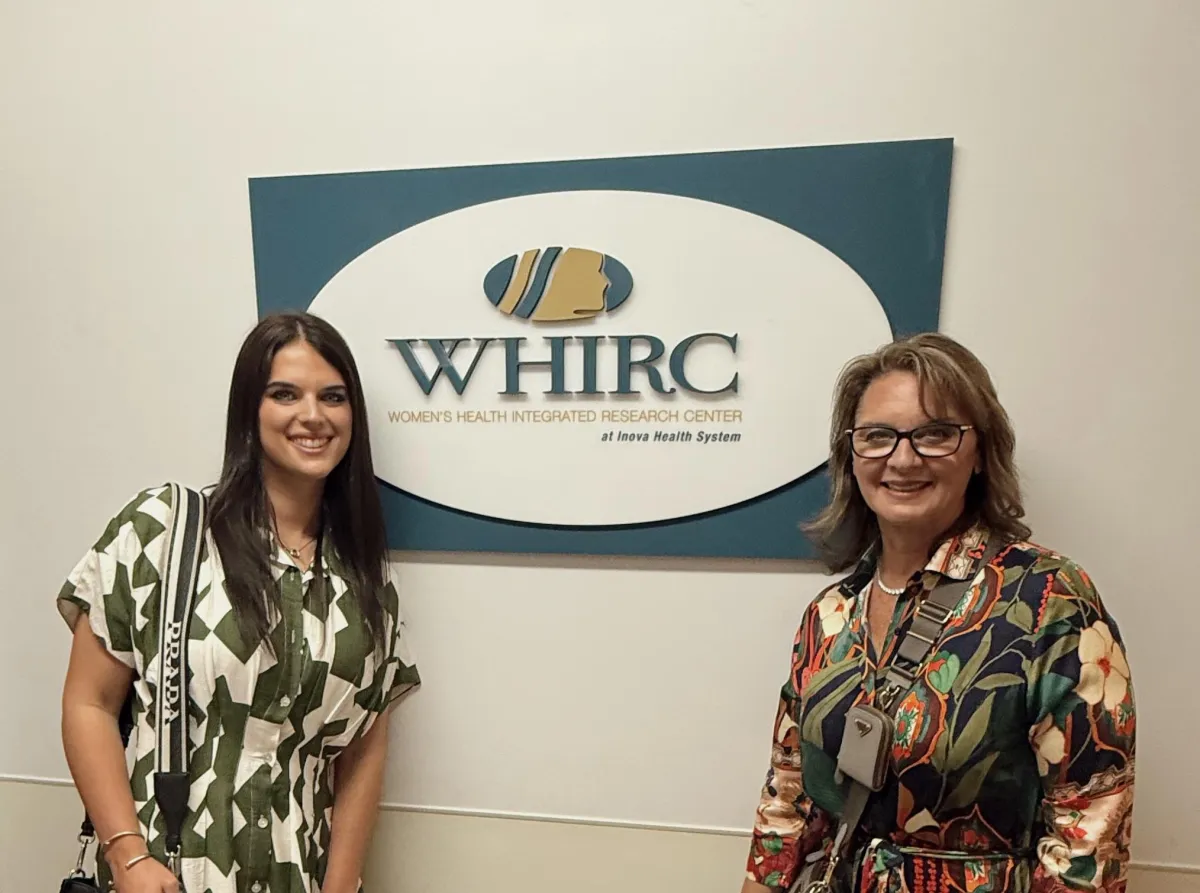
Krissy joined me in touring the Women’s Health Integrated Research Center (WHIRC) at Inova in Annandale, Virginia — and we left both inspired and hopeful.
WHIRC isn’t your typical lab. It’s a place where clinical care and advanced science meet — where physicians, researchers, and technologists work together to better understand women’s health at the molecular level. Their work spans genomics, proteomics, and biomarker discovery — powerful tools that help us detect diseases earlier, personalize treatments, and ultimately improve outcomes for women across generations.
From studying gynecologic cancers to exploring new ways to support women through pregnancy and menopause, the WHIRC team is helping redefine how women’s health research is done. It’s research that matters — not only for patients in Northern Virginia, but for women everywhere.
We were both struck by the passion the leaders had for finding answers to the most challenging health issues facing women. As Dr. Maxwell and Dr. Conrads shared, endometriosis is grossly underfunded, and private funding is essential to begin making a dent in what we still don’t know about this disease. A lab like WHIRC has the capability to make a lasting difference.
For us at Our Daughters Foundation, this visit was a powerful reminder of why we do what we do: to uplift, connect, and advocate for women’s health, equity, and empowerment. Seeing this kind of innovation up close makes us even more committed to bridging the gap between research, awareness, and real-world impact.
A heartfelt thank-you to the WHIRC team at Inova for welcoming us, sharing their knowledge, and showing us what’s possible when passion meets purpose. We can't wait to share more of our happenings at Our Daughters Foundation. Please spread the word and help us make a difference!

Join Us: Make a Difference Today
Your support can transform lives. Every donation helps us fund research, advocate for better care, and provide essential grants to women facing debilitating conditions.
Join Us: Make a Difference Today
Your support can transform lives. Every donation helps us fund research, advocate for better care, and provide essential grants to women facing debilitating conditions.

